She Didn’t Want to Look Like an Accountant — And That Changed Everything
- Lorelei Davis
- Apr 3
- 4 min read

Updated: Apr 22
I shot a CFO consultant recently, and it was one of those shoots that quietly reinforces something I already believe about brand photography.
Not in a dramatic, “this changed everything” way. More in a “this is exactly why I do things this way” kind of way.
Because on paper, this shoot could have gone in a very predictable direction.
Finance. CFO. Consultant.
You can already picture it.
A blazer, a laptop, a clean office, maybe a few shots looking focused and “in action.”
It would have looked professional, polished, and completely appropriate for the industry.
And to be fair, its one great way, but I have a theory of a better way...
But it would involve what feels like a risk, what goes against 'the expected', and being more raw.. Up to the challenge?
Where did we start?
Before we even got into creative direction, I spent time understanding her properly.
There's another side to what she does, but how does she work? How does she think? And probably most important, what does it actually feel like to be a client in her world??
One of the first things she said was that she didn’t want to be seen as “just an accountant.” 😱 whaaat?!

BUT.. That wasn’t coming from a branding angle. It was coming from experience.
She had spent 25 years in corporate environments that were fast, structured, and very outcome-driven. Over time, she realised that what she valued most in her own work wasn’t the traditional, top-down “expert” dynamic.
It was the opposite.
Her clients often come to her feeling overwhelmed, unsure, and sometimes even embarrassed about their finances. They’re not looking for someone to dominate the conversation or make them feel small. They’re looking for someone who can meet them where they are, help them understand what’s going on, and give them clarity without judgement.
That’s the part of her work that actually matters.
pondering..pondering... 🧐 turning the cogs...
The part most people would photograph
If you were to shoot this purely from a surface level, you’d focus on the visible elements of her role.
Finance tools, office settings, structured environments. You’d lean into what people expect a CFO to look like, because it signals credibility and professionalism.
But that version only communicates the job title.
It doesn’t communicate the experience.
The direction we took instead
Once we understood how she actually works with people, the direction became much clearer.
We weren’t trying to make her look more “like a CFO.” wait..what??
We were trying to show what it feels like to sit across from her.
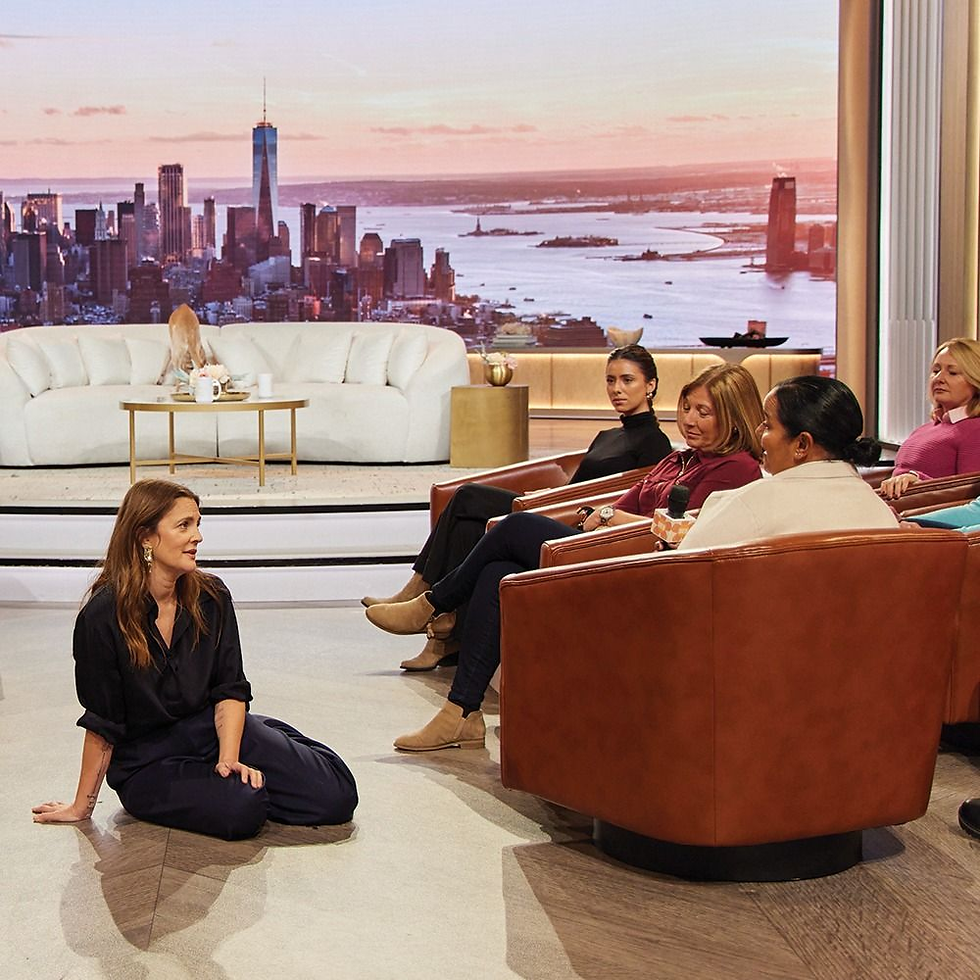
The reference point I kept coming back to was the energy of the Drew Barrymore show. Not visually, but in how it feels. There’s no sense of hierarchy. She sits with people, not above them. The environment feels relaxed, conversational, and real.
That’s what builds trust.
So instead of building a shoot around poses, we built it around interaction. 🤗
I had her working with another person in a way that mirrored her real client experience. Talking things through, listening, responding, explaining. I guided the moments slightly to bring out different parts of that interaction, but the focus was always on keeping it natural enough that the emotion came through without being forced.
The visual choices
Styling and environment followed that same thinking.
She wore denim instead of a blazer. That decision alone shifted the tone of the entire shoot. It made her feel more approachable, more grounded, and more aligned with how she actually shows up with clients.
We used couches, notebooks, and coloured pens instead of overly corporate setups. The financial side of her work was still present, but it wasn’t the dominant feature in every frame.
It became part of the story, not the whole story.
What this actually shows

This is the part that gets missed a lot.
Most brand photography focuses heavily on what someone offers. The role, the service, the tangible output.
But that’s not how people make decisions.
One of my strategies revolves around the fact that,
perception drives behaviour, behaviour drives decisions.
People are trying to understand what it will feel like to work with you.
Will I feel comfortable? Will I feel understood?Will I feel confident in this person?
Those answers don’t come from a perfectly styled desk shot.
They come from seeing how someone interacts, how they hold space, and how they show up in the moments that matter.
The balance
This doesn’t mean you remove the professional side entirely.
She is a CFO consultant. That context is still important.
But instead of expecting that to carry the entire perception, we built everything around it. The experience, the interaction, the emotional side of the work — that’s what gives the role meaning.
Without that, you’re left with something that looks correct, but feels flat.

What this means for your brand
If your current imagery feels like it ticks all the boxes but still isn’t doing much for you, it’s usually not because it’s bad.
It’s because it’s incomplete.
It shows the role, but not the experience. The output, but not the process. The surface, but not what actually makes someone choose you.
And that’s the gap.
Final thought
This shoot wasn’t about changing what she does.
It was about showing it in a way that people can actually recognise themselves in.
Because when someone can see themselves in the experience, they don’t just understand what you do.
They start to want it.
She's not just a CFO consultant. She's someone who's sat in the same rooms her clients are sitting in now. That's what clarity looks like when it comes with empathy.
What now?
If your brand photos feel accurate but not impactful, there’s usually a missing layer.
That’s the part worth building.


Comments